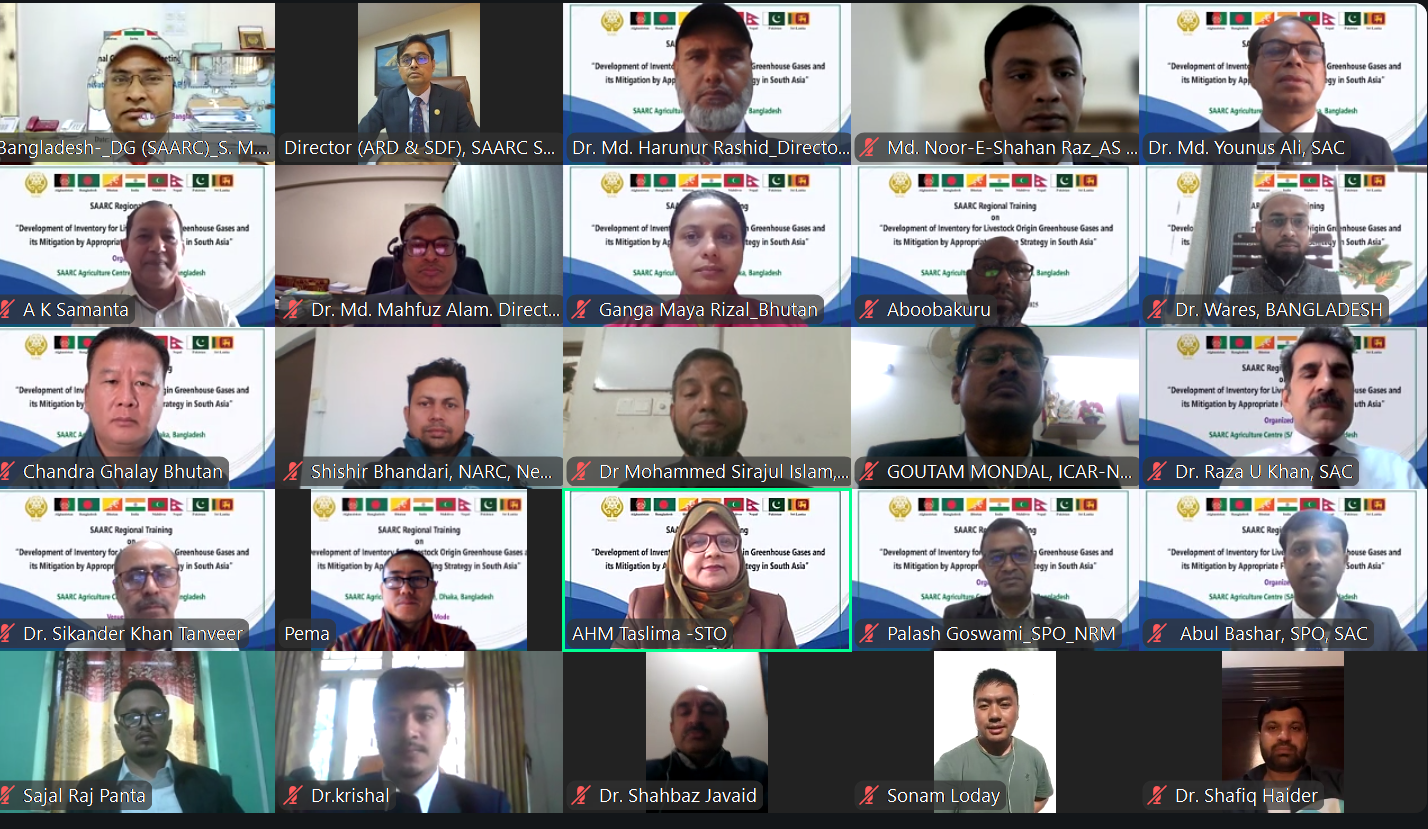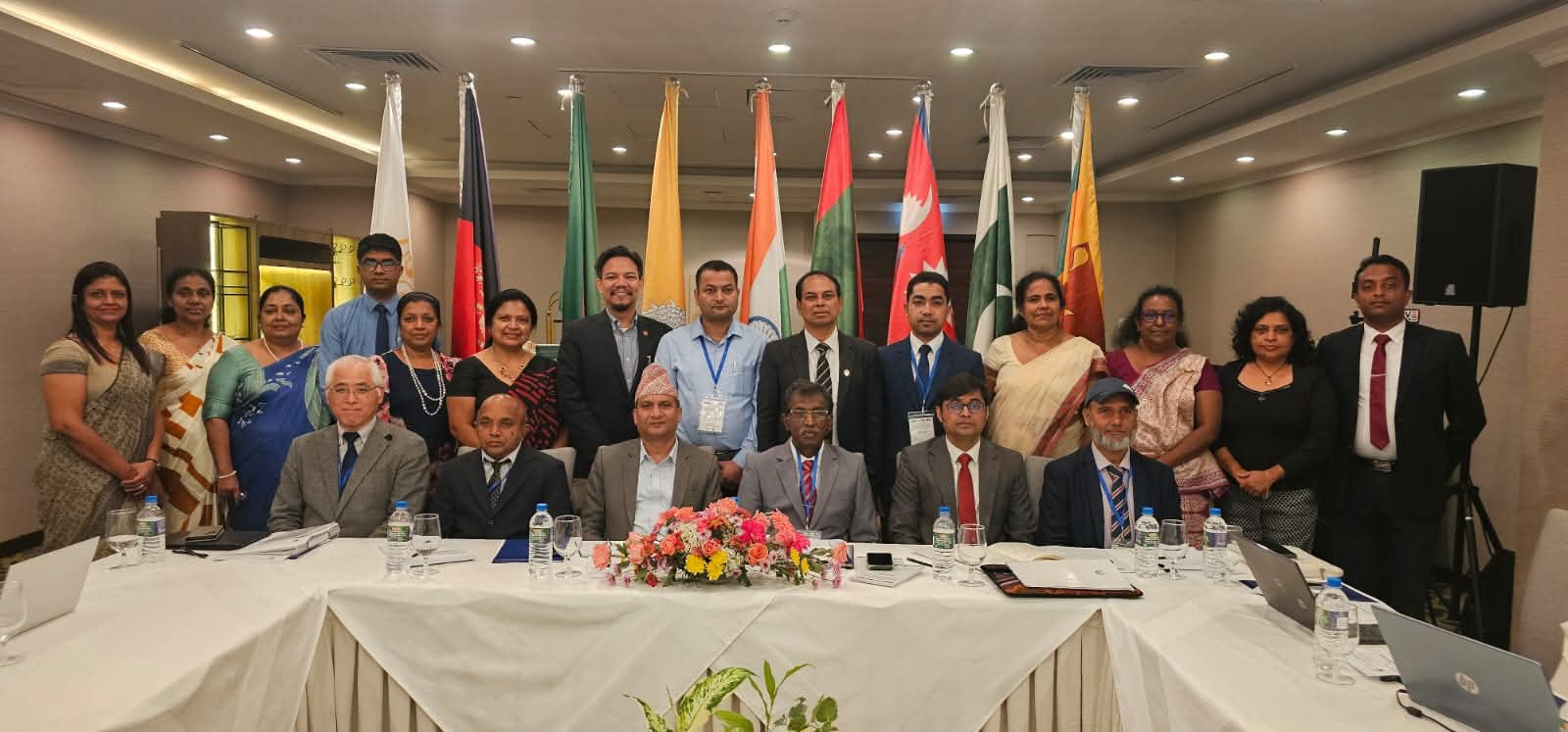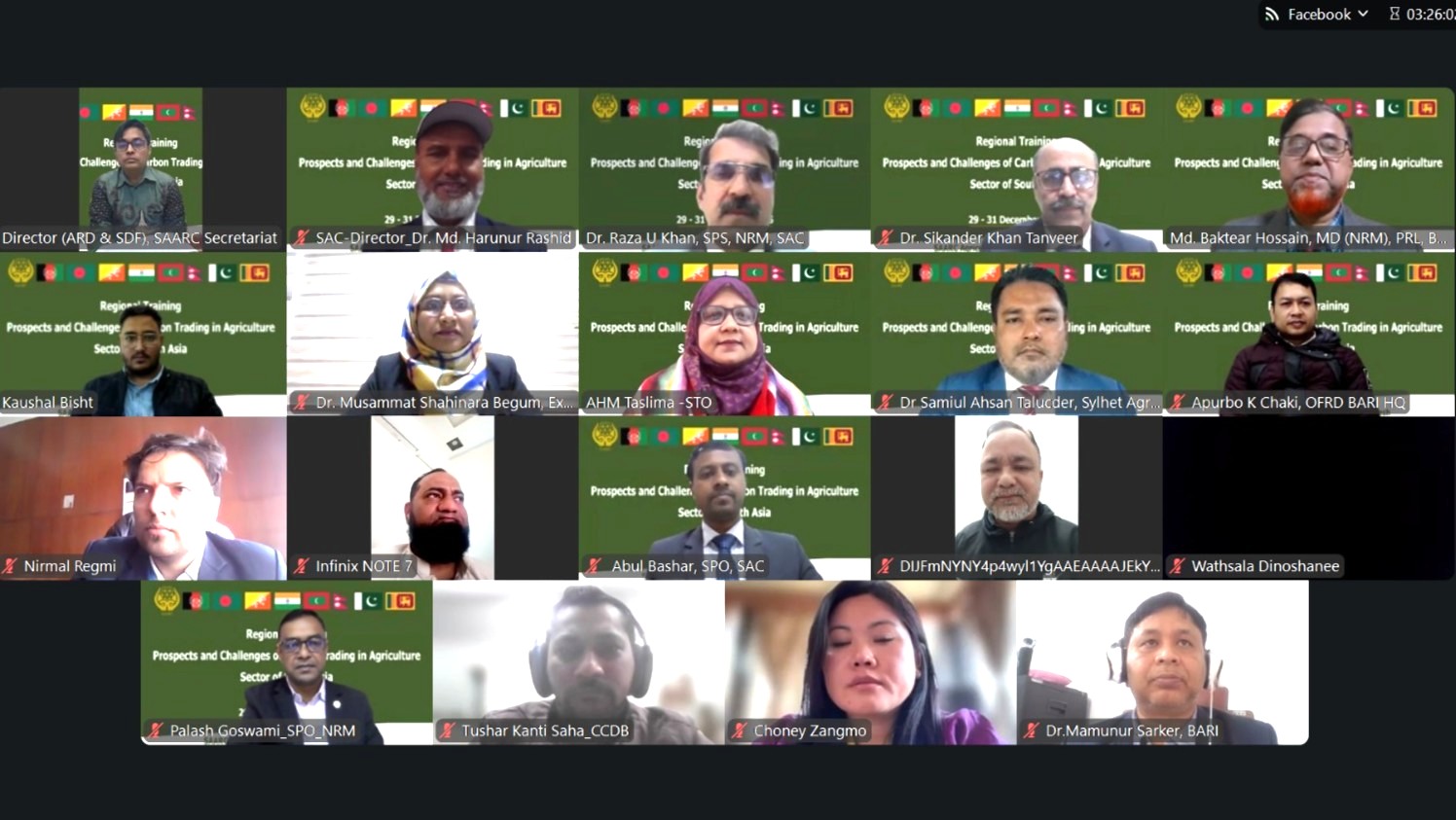
A three-day regional training on Prospects and Challenges of Carbon Trading in the Agriculture Sector in South Asia began on Monday (29 December 2025) in virtual mode, organized by the SAARC Agriculture Centre (SAC). The program brought together policymakers, researchers, development practitioners and private sector representatives from SAARC region and abroad to explore how carbon trading can support sustainable agriculture and climate action across the region.
The inaugural session opened with welcome and opening remarks by Dr. Md. Harunur Rashid, Director, SAARC Agriculture Centre. He highlighted the growing vulnerability of South Asian agriculture to climate change and stressed the need for innovative financial mechanisms to support farmers. Dr. Rashid noted that carbon trading, if designed carefully, could climate-smart practices while improving rural livelihoods. He emphasized the importance of regional cooperation under the SAARC framework to ensure fair access and shared learning.
The Chief Guest, Dr. Md. Abdus Salam, Executive Chairman of the Bangladesh Agricultural Research Council, underscored the importance of strong research support to generate reliable data for carbon accounting in agriculture. He also emphasized the need to protect farmers’ interests and ensure that carbon trading complements food security rather than competing with it, while calling for evidence-based policies and regional cooperation to make such initiatives practical and equitable.
The Special Guest, Mr. Tanvir Ahmad Torophder, Director (ARD & SDF), SAARC Secretariat, delivered his remarks by emphasizing policy alignment at the regional level. He stressed upon the harmonized standards, knowledge sharing and capacity building are essential to make carbon trading accessible to farmers across member countries. He also highlighted SAARC’s role in facilitating dialogue between governments and the private sector.
The keynote presentation was delivered by Mr. Kaushal Bisht, Lead Partnership and Strategic Alliance at Varaha, India. In his presentation on the present and future scenario of carbon trading in South Asian agriculture, he outlined global trends in voluntary and compliance carbon markets and their relevance for smallholder farming systems. Mr. Bisht pointed out that practices such as improved soil management, agroforestry and reduced methane emissions from agricultural sector hold strong potential for generating carbon credits.
Dr. Raza Ullah Khan, Senior Program Specialist (NRM) and Training Coordinator presented the objectives and overall overview of the training. He explained that the program aimed to build technical understanding of carbon markets, explore opportunities for agriculture-based carbon credits and discuss institutional and policy challenges specific to South Asia. Dr. Khan highlighted that the agriculture sector is a cornerstone for addressing climate change in South Asia if it is properly managed. He noted that agriculture can act as a carbon sink and help reduce emissions, contributing to climate resilience in the region. He stressed that the sector must be positioned not only as a victim of climate change but also as an important part of the solution.
Date: 29.12.2025
Dhaka, Bangladesh